
Resurrection
Resurrection
On Easter, Spring, and the Archetypal Concept of Resurrection. ©Angie Buchanan April 8, 2020
As a child growing up, I was often encouraged to explore, to ask questions – to ask “the question”: “What happened before that? And what happened before that? And what happened before that?” Today, with relation to ‘resurrection,’ I’m going to ask you to keep that question in your mind and together we will pursue it back 30,000 years.
Cultural historians find, in the celebration of Easter, a convergence of the three traditions - Pagan, Hebrew and Christian.
History is written by the victors. Based on the observances of the Venerable Bede, an English historian and monk of the early 8th century, Easter owes its origin to the old Teutonic mythology. The name was quite possibly derived from the name Eostre, the Anglo-Saxon goddess of spring, to whom the month of April was dedicated. The festival of Eostre was celebrated at the vernal equinox, when day and night are the most equal in length.
Bede’s interpretation of what he witnessed is likely just that- an interpretation. He is the first to have referred to Ostara (commonly embraced Wiccan tradition/celebration) as a goddess. There is little corroboration of this, and chances are that no such goddess existed, rather - what he witnessed was a local fertility ritual.
The "Oestre" name in Latin apparently derives from the Greek and has its roots in a word that means "frenzy." We see this word again in English in "estrus," meaning a female mammal 'in heat' and able to conceive, (root of estrogen) and there we see the meaning behind the "frenzy" definition.
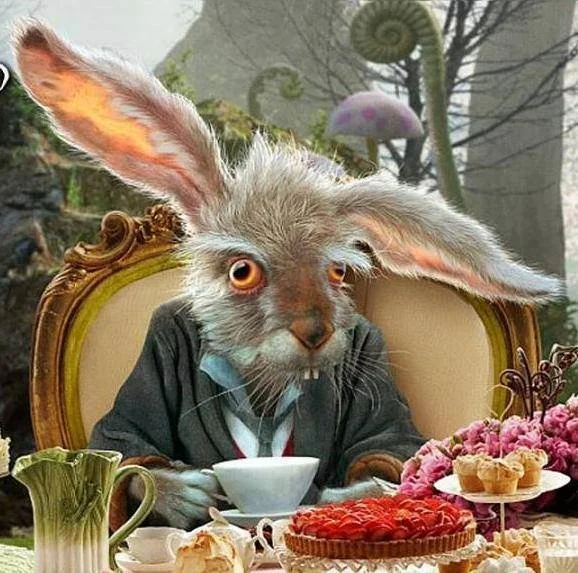
Fertility sexuality… Mating rabbits…Mad as a March Hare…
As People of the Earth – which we all are…we live in a world of circles, interloping, concentric wheels of life and time - our lives constantly overlapping the lives of others but always at the root we share things that are forever unchanging:
Breath
Rising and setting of the sun
Phasing of the Moon
Seasons
As these cycles change, what happens inside of us is mirrored by what’s happening outside in Nature – and vice versa
Melancholy of fall
Despair of winter
Quickening – Feb
Hope of Spring -- outside
Here in the Midwest, we are now experiencing the Hope of Spring.
Light changes
Animal sightings
Birdsong changes – where once they fought now they’re in love
Ground softens
Green shoots push up from the dirt
Inside
Flutters… renewal
Stand straighter
Breathe deeper
New clothing
Clean house
Cabin fever – throw open the windows
The planet is resurrecting!!!
Throughout our world Spring is the season of sexual fertility. What was once barren, dead, cold is now resurrected, alive, rising.
Tree sap
Green shoots
Testosterone (In the spring a young man's fancy turns to thoughts of love). This line is from a poem, “Locksley Hall,” by Alfred, Lord Tennyson. Died in 1892
Celebrations
Mardi Gras
Carnival
Prom
Easter
The Council of Nicaea in 325AD, established the date of Easter. It is the first Sunday after the first full moon that follows the vernal equinox in March.
Easter – the time of resurrection.
Resurrection
He who speaks with primordial images speaks with a thousand tongues… (Carl Jung)
Every culture that is examined, whether ancient or modern, has the concept of a dying and resurrected god. The manifestation takes many forms and is as primal as the unconscious recognition of the deep spiritual meaning grafted onto the vernal equinox.
The concept of a dead and re-birthed deity 30,000 years old.
The story is similar through history, across culture, continent and language. This is not to say that one tradition stole from another, only that there seems to be an overall archetypal representation of the resurrection story and that it mirrors the cycle of nature that is Spring in the northern hemisphere.
God/man born of a union between a Deity (male supreme Being) and a Female Mortal (virgin)
Lives a humble life of teaching but is tormented and persecuted throughout it
Is killed by some sort of hanging from a tree, – usually there’s an angry mob involved. Sacrifices, human or otherwise, to the gods were commonly hung in or from trees, often transfixed by spears.
Spends a few days hobnobbing with whatever cast of characters happens to be hanging out in the underworld at the time and acquiring great amounts of wisdom and knowledge.
Rises from the dead – becomes immortal – always in the Spring
Mother becomes Queen
Osiris – one of the earliest -- Egyptian
What sets Osiris apart is that after his horrendous death, his body is dismembered and scattered. Isis, his wife, collects the pieces, except for the phallus, which has been fed to the fishes. She creates a new phallus for him though – out of gold, and he manages to impregnate her with it. This is the resurrection of fertility that is a common theme this time of year.
Tammuz was an ancient Babylonian archetype of the dying and reborn god. He was connected with agriculture and livestock as well as wild animals. Tammuz was recognized as the river god of the Tigris and Euphrates, and he was also the son and brother of Ishtar, for the two came together when the world began where she gave birth to Tammuz, had sexual intercourse with him and yet remained a virgin. After his death in the summer all vegetation also perished and Ishtar searched for him around the globe. When she finally descended into the underworld and found her consort, she resurrected the god in the spring and the world came back to life with his rise from the grave.
Dionysus also known as Bacchus the god of the vine, wine/grapes -- born of a mortal woman, Semele, and a god, Zeus. His mother is killed, he descends to Hades to rescue her, and he places her among the stars. This celebration of this occurs in the Spring; however, the birth of Dionysus is December 25th.
Odin – the chief god in Norse mythology Odin is attributed with discovering runes. He was hung from the tree called Yggdrasil while pierced by his own javelin nine days and nine nights, in which he visited the underworld to learn the wisdom that would give him power.
200 B.C., most ancient religions in the Mediterranean area had a major seasonal day of religious celebration at or following the Spring Equinox.
Cybele, the Roman fertility goddess, had a consort, Attis. Born of a virgin, he died and was resurrected annually during the period MAR-22 to MAR-25. He was a god of ever-reviving vegetation. The festival began as a day of blood on Black Friday and culminated after three days, in a day of rejoicing over his resurrection.
Centuries later, the Christian worship of Jesus and Pagan worship of Attis were active in the same geographical area at the same time.
The New Year
In many traditions, this time of resurrection is also the start of the new year. The Roman year began on the ides of March (15th). The astrological year begins on the equinox when the moon moves into the first sign of the Zodiac, Aries, the Ram. The Greek God Ares is equivalent to the Roman Mars for whom the month of March is named. Between the 12th century and 1752, March 25th was the day the year changed in England and Ireland. March 25, 1212 was the day after March 24, 1211.
The festival of Nawruz, Persian New Year, which falls on the spring equinox. The table is decorated with a mirror, a bowl of water with one freshly-picked green leaf floating in it, a candelabra containing a candle for every child in the house, a copy of the Koran (or other sacred text such as in the Bahá'í Faith), rose water, sweets, fruit, a fish, yogurt and colored eggs.
Earth Day - Secular
On April 22, 1970, Earth Day was officially founded, but for some, it is celebrated on the Spring equinox (around March 20) to mark the precise moment of astronomical spring.
Earth Day is typically celebrated with outdoor events focused on environmental service. Common activities include planting trees, picking up trash, promoting recycling and conservation, and using recyclable containers. People may also sign petitions for action against climate change and environmental destruction being caused by corporate contributions to air, soil and water pollution.
Most Pagans recognize Earth as a sentient Being; earth-based spirituality is our religion. We use the natural cycles of the planet to inform our rituals and practices.
And so – on the Easter Sunday, the most holy day of the Christian calendar, we all celebrate the idea of resurrection, the popping up from the grave.
For some it is a deity, for others, green shoots from the dirt, fuzzy buds on branches, the new sweetness of birdsong, and the robust mating rituals demonstrated by many creatures – from the mating frenzy of rabbits to the elegant courting dance of sandhill cranes.
Life goes on. The cycle repeats. May the resurrection of your spirit, your life and your world be healthy, happy and prosperous. Happy Resurrection Day!
It’s the blood of the Ancients
That runs in our veins
And the forms pass
But the circle of life remains
© Charlie Murphy
© Angie Buchanan April 8, 2020