
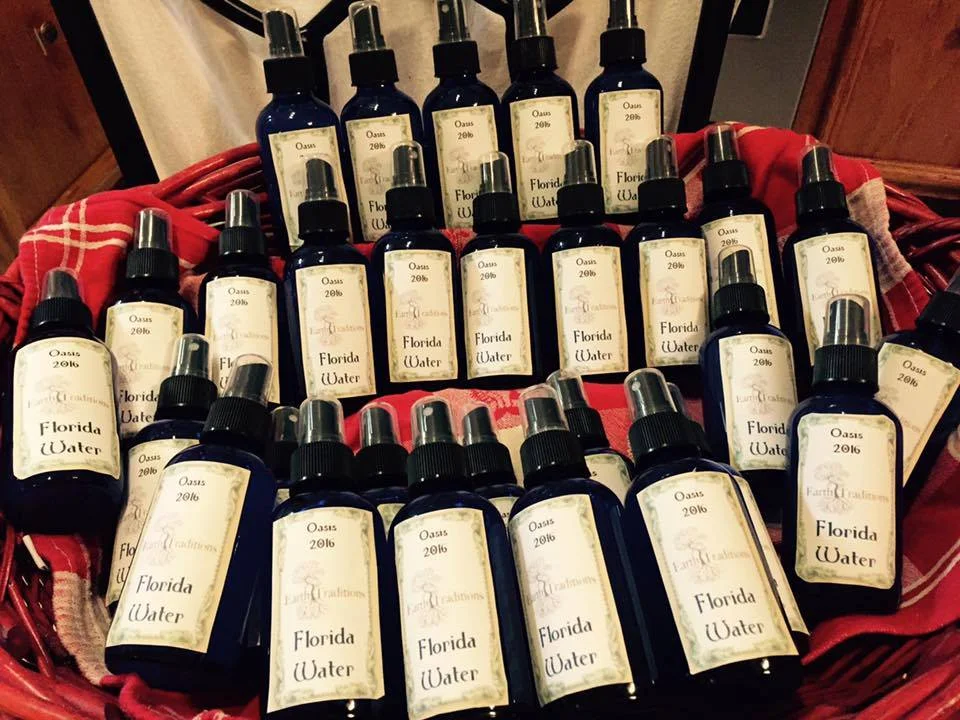
This handout introduces Florida Water as a traditional tool for cleansing, blessing, protection, and everyday refreshment. Because Florida Water is often used within hoodoo, root work, and related folk-magic traditions, we will begin with a brief overview of those traditions before turning to the history, uses, safety considerations, and workshop recipe for Florida Water.
Folk Traditions and Shared Practices
Hoodoo
Hoodoo originated among African American communities in the Southern United States, especially during and after the era of slavery. It developed from a blend of West and Central African spiritual traditions, Indigenous American botanical knowledge, European folk magic, and Christian—especially biblical—beliefs. Hoodoo is not an organized religion with formal clergy or initiation. It is better understood as a folk-magical and healing tradition passed through families, communities, root workers, conjure practitioners, elders, and local teachers.
Root Work
The terms hoodoo and root work are closely connected. Hoodoo refers to the broader system of African American folk magic, spiritual cleansing, protection, healing, and practical spell work. Root work highlights the use of roots, herbs, minerals, waters, oils, powders, candles, and other natural or household materials as active spiritual tools. A root worker, also called a conjure worker, selects and prepares these materials for baths, floor washes, mojo bags, anointing, protection work, blessing work, and the removal of harmful conditions.
Appalachian Folk Magic
Hoodoo, root work, and Appalachian folk magic are neighboring folk traditions that share practical, home-based methods while carrying distinct histories and cultural identities. Appalachian folk magic developed in the mountain South through a blend of European settler traditions, Indigenous knowledge, Christian prayer, folk healing, herbalism, signs, omens, and local “granny magic.” Hoodoo and root work are primarily African American traditions rooted in West and Central African spiritual systems and shaped by slavery, Christianity, Indigenous plant knowledge, and Southern life.
A practice shared by hoodoo, root work, and Appalachian folk magic is the belief that ordinary materials—roots, herbs, salt, water, ash, iron, brooms, thresholds, doorways, and floor washes—can carry spiritual power when used with prayer, intention, and inherited knowledge. In all three traditions, the home itself becomes a working space: floors are washed to remove trouble or draw in blessing, doorways are protected, herbs are used for healing or luck, and spoken prayers or charms give direction to the work. Their shared geography and rural context created points of exchange, especially around herbs, spiritual cleansing, Bible verses, protection charms, curing practices, and household ritual. All three traditions developed among communities where healing, protection, luck, and spiritual defense were part of everyday life.
Hoodoo Practice: Baths, Floors, and Directional Work
In hoodoo terminology, performing a ritual or spell is often called “doing a job.” Some jobs are simple and practical, such as bathing, anointing the body, washing the home, or preparing a space in a particular way. More complex work may involve dressing an amulet, burning candles or incense, preparing a mojo bag, or placing powders, roots, or herbs in a specific location.
When materials such as powders, roots, or herbs are placed where they will be touched or crossed by the intended person, the work may be called laying down a trick, tricking, or throwing down. A traditional saying associated with this kind of work is, “Lay your trick, walk away, and don’t look back.” In this context, looking back can symbolize doubt or a lack of faith in the work.
Because hoodoo is often understood as a form of natural magic, many practitioners regard roots, herbs, minerals, waters, and other materials as spiritually potent in themselves. Rather than “charging” or “empowering” them in a modern ceremonial sense, the worker may pray, speak intention, or offer gratitude as a blessing and acknowledgment of the spirits, ancestors, or forces being called upon.
Spiritual baths and floor washes often use direction as part of the work. To draw in luck, love, prosperity, customers, or blessing, the movement is commonly upward or inward. To remove harmful conditions, crossed conditions, or unwanted influences, the movement is commonly downward or outward.
For example, a spiritual bath intended to draw in good luck may be poured over the body while the bather rubs upward. A bath meant to remove harmful conditions may be worked downward instead. The used bath water, now carrying the essence of the bather, may be saved for further work: ritually sprinkled, used to wipe away enemy tricks or witchcraft, added to a floor wash, or disposed of in a direction that matches the intention of the work.
Floor washing follows the same principle. To attract good fortune, business, customers, or love, a doorstep may be scrubbed inward to draw in what is wanted. To cleanse a home or business of unwanted conditions, the work may move from the top floor down, from the back of the space toward the front, and finally out through the front door or toward the property line.
Florida Water
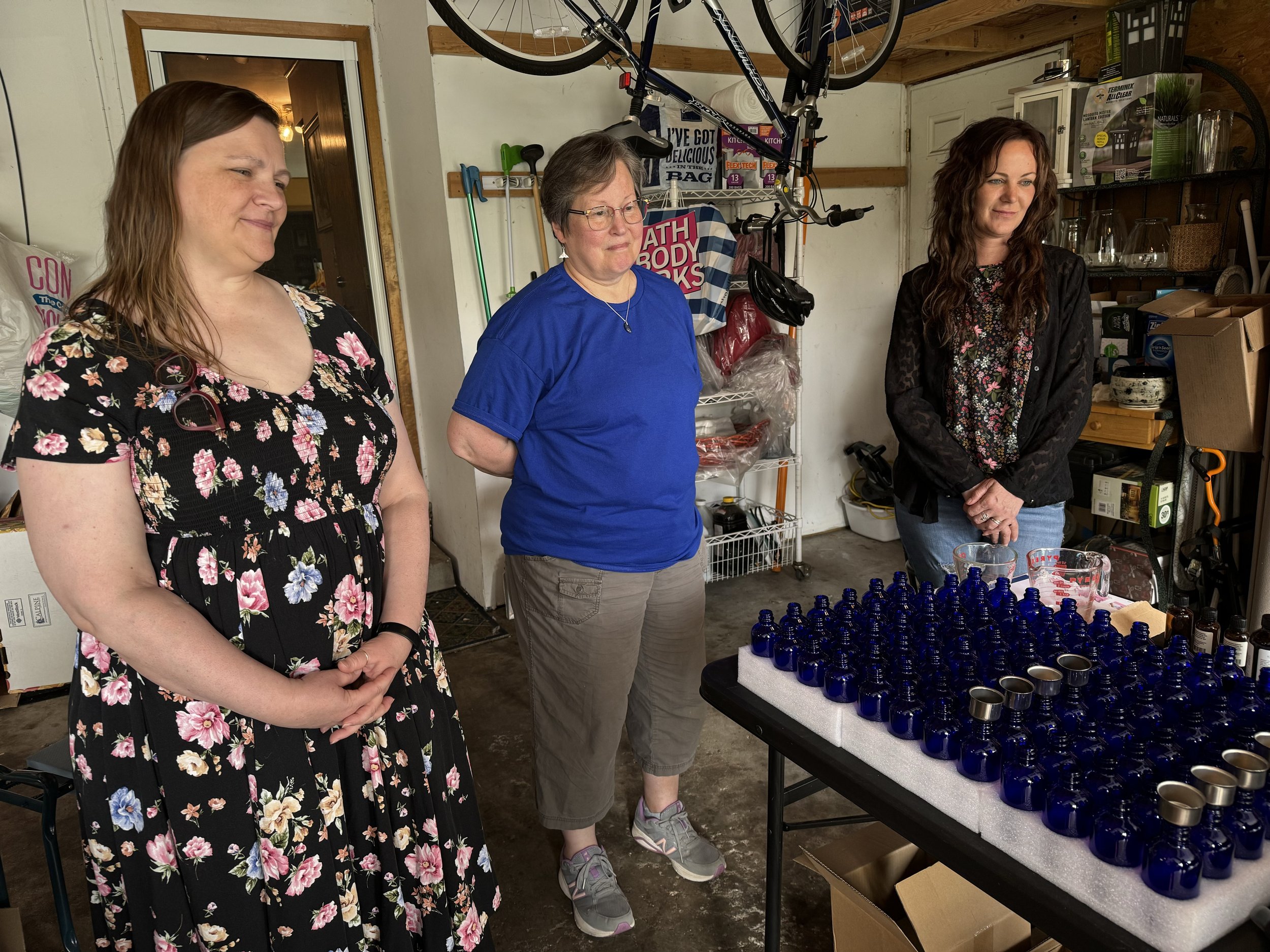
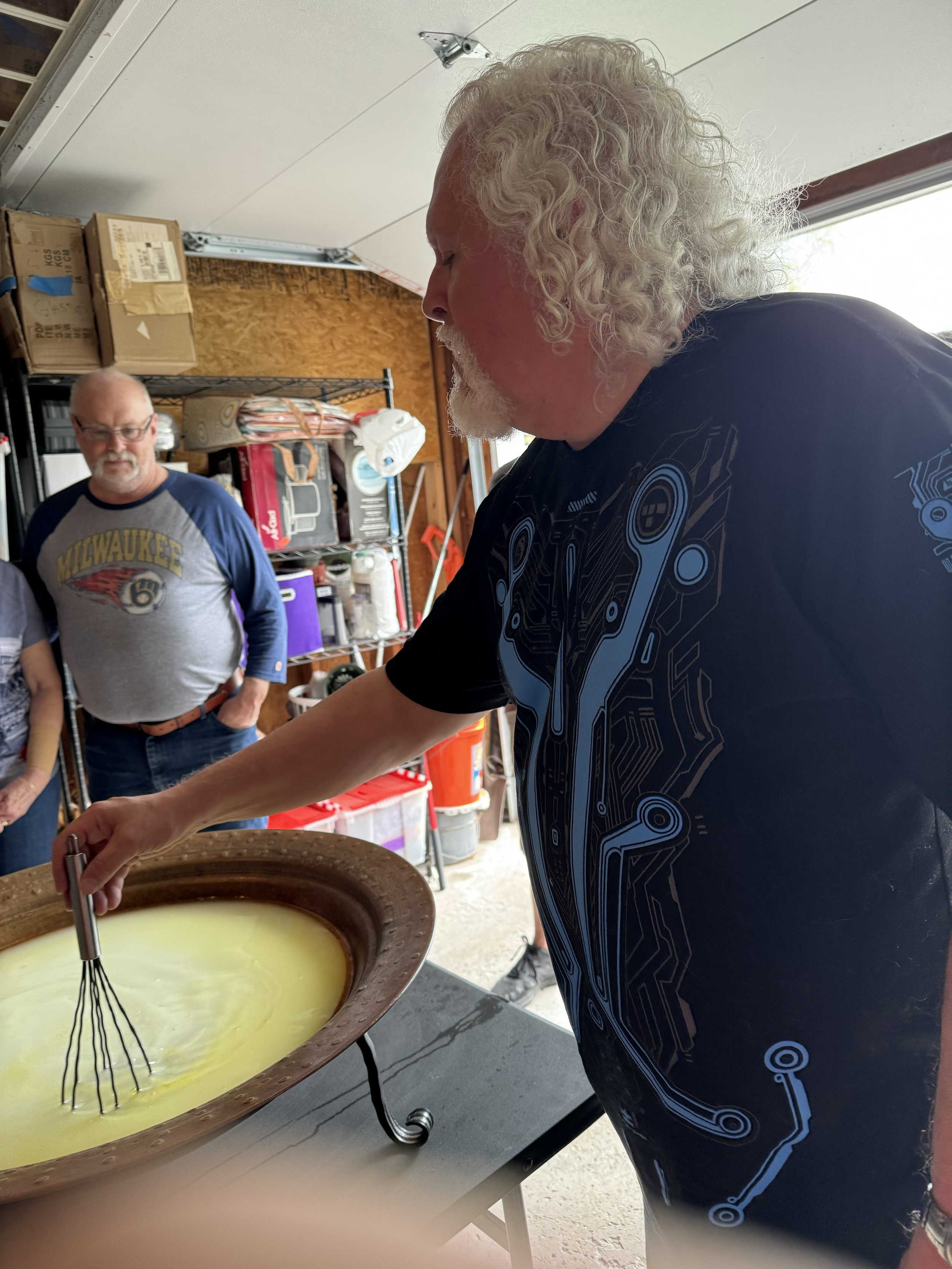
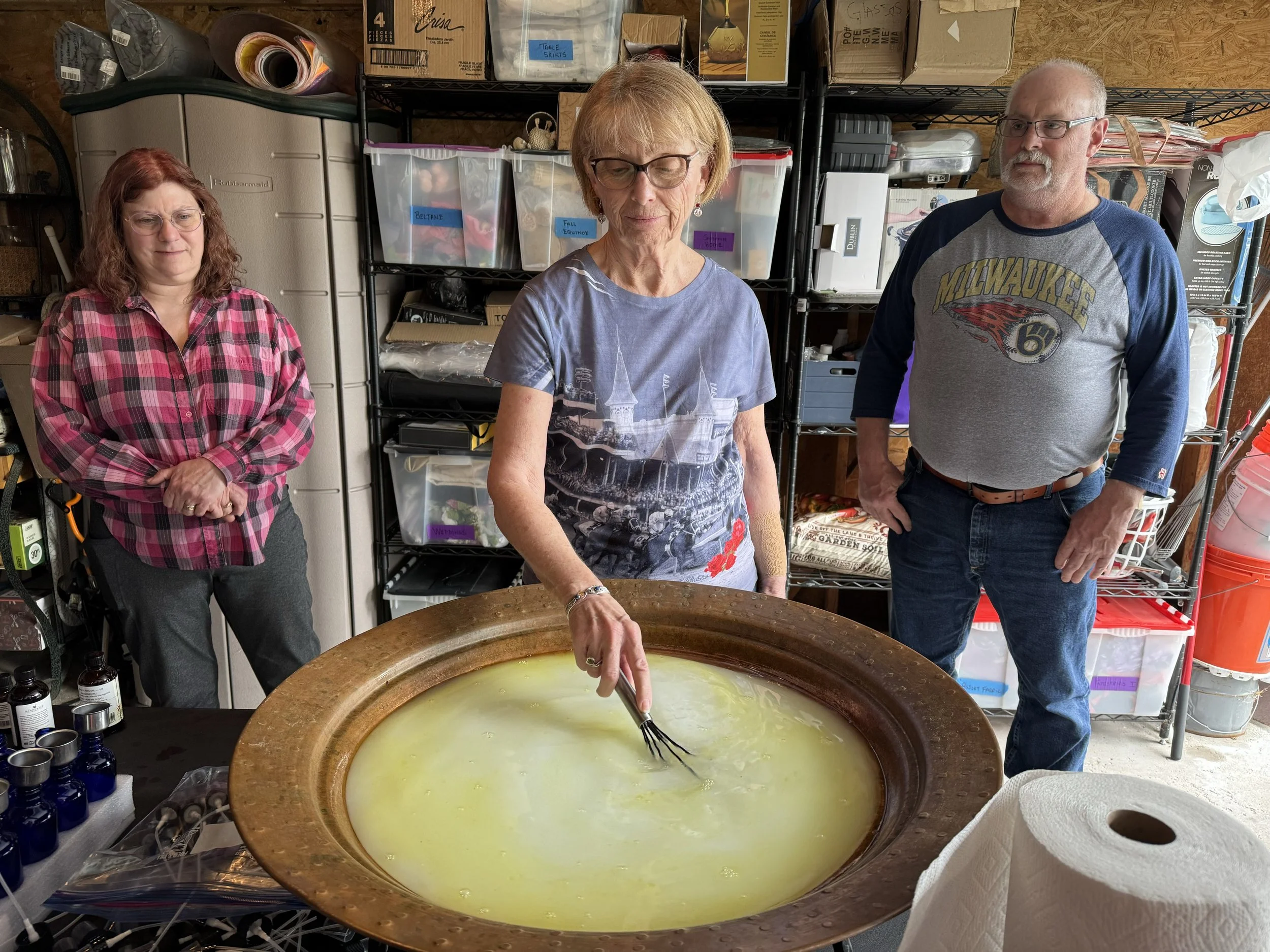
While Florida Water is widely used in spiritual cleansing, blessing, protection, and refreshment practices, it is not an initiatory, closed, or exclusively sacred cultural practice. It began as a very mundane, 19th-century American cologne and was later adopted into many different folk, devotional, and spiritual practices. Today it is widely used by spiritual workers in hoodoo, Vodou, Santería, Espiritismo, Pagan, and other folk and devotional traditions. At Earth Traditions we make Florida Water in community, adding the ingredients, and singing blessings over the mixture as we take turns stirring together, blessing the bottles, bottling and labeling.
Florida Water was introduced in New York City in 1808 by perfumer Robert I. Murray. Murray later partnered with David Trumbull Lanman, and the product became associated with the Murray & Lanman name. It was sold in pharmacies and general stores as a unisex cologne, aftershave, cooling splash, household scent, and general-purpose refreshment. Its scent is usually bright and citrus-forward, with floral, herbal, and spicy undertones. Its name evokes both flowers and the legendary Fountain of Youth associated with Florida.
Spiritual Uses of Florida Water
Florida Water can be used in a variety of ways. In spiritual practice, it is commonly used to reset the body, cleanse a room, bless an altar, prepare for ritual, settle heavy energy, and support prayer, ancestor work, or divination. Because Florida Water is often offered in ancestor veneration, used for asperging, (which often entails taking a small amount into the mouth and spraying it out) or misted through the air as part of prayer and cleansing, it is better to avoid isopropyl alcohol and use only drinkable alcohol, such as high-proof grain alcohol or vodka, as the base. The blend is still used externally and is not meant to be consumed, but using drinkable alcohol keeps the preparation appropriate for spiritual offerings, blessing work, and ritual contact with the body, altar, or home.
• Use it for ritual cleansing, purification, blessing, and protection.
• Add a few drops to a spiritual bath, floor wash, or bowl of water before cleansing a space.
• Spritz or lightly dab it on the body before ritual, prayer, meditation, readings, or energy work.
• Spray it into the air and walk through the mist for cleansing, blessing, protection, or preparation before spiritual work.
• Wipe down altar tools, candles, crystals, jewelry, or new items brought into the home.
• Place a small glass or bowl on an ancestor altar as an offering or to symbolically clear the air for communication.
• Anoint doorways, windows, thresholds, and floors when blessing or cleansing a home.
• Mist a room, workplace, or sacred space to refresh the atmosphere and encourage peace.
• Add a few drops to ink or paper when writing petitions, prayers, or spell work.
• Keep a small bowl near or under the bed for symbolic protection, restful sleep, or relief from unsettling dreams.
• Lightly mist bedsheets and pillows for dream blessing, peaceful sleep, and symbolic protection through the night.
Everyday Uses of Florida Water
Outside of spiritual practice, Florida Water has long been used as a light cologne, aftershave, room freshener, linen splash, and cooling body fragrance. Some people use it to refresh the skin, ease the feeling of heat, scent a room, or add a bright citrus aroma to laundry, towels, and household cleaning water.
Safety Notes
• Florida Water usually contains alcohol and is flammable. Do not spray, pour, or place it near open flames, lit candles, hot surfaces, or incense.
• Allow any object wiped with Florida Water—especially candles—to dry completely before lighting or using near heat.
• Do not set the bottle down of finished furniture, it will damage varnish.
• Use externally only. Do not drink Florida Water or ingest homemade blends.
• Patch test before applying to skin, especially if you are sensitive to alcohol, citrus oils, clove, cinnamon, lavender, rose, or fragrance oils.
• Keep Florida Water away from children, pets, eyes, broken skin, and delicate surfaces that may be damaged by alcohol or essential oils.
Workshop Formula
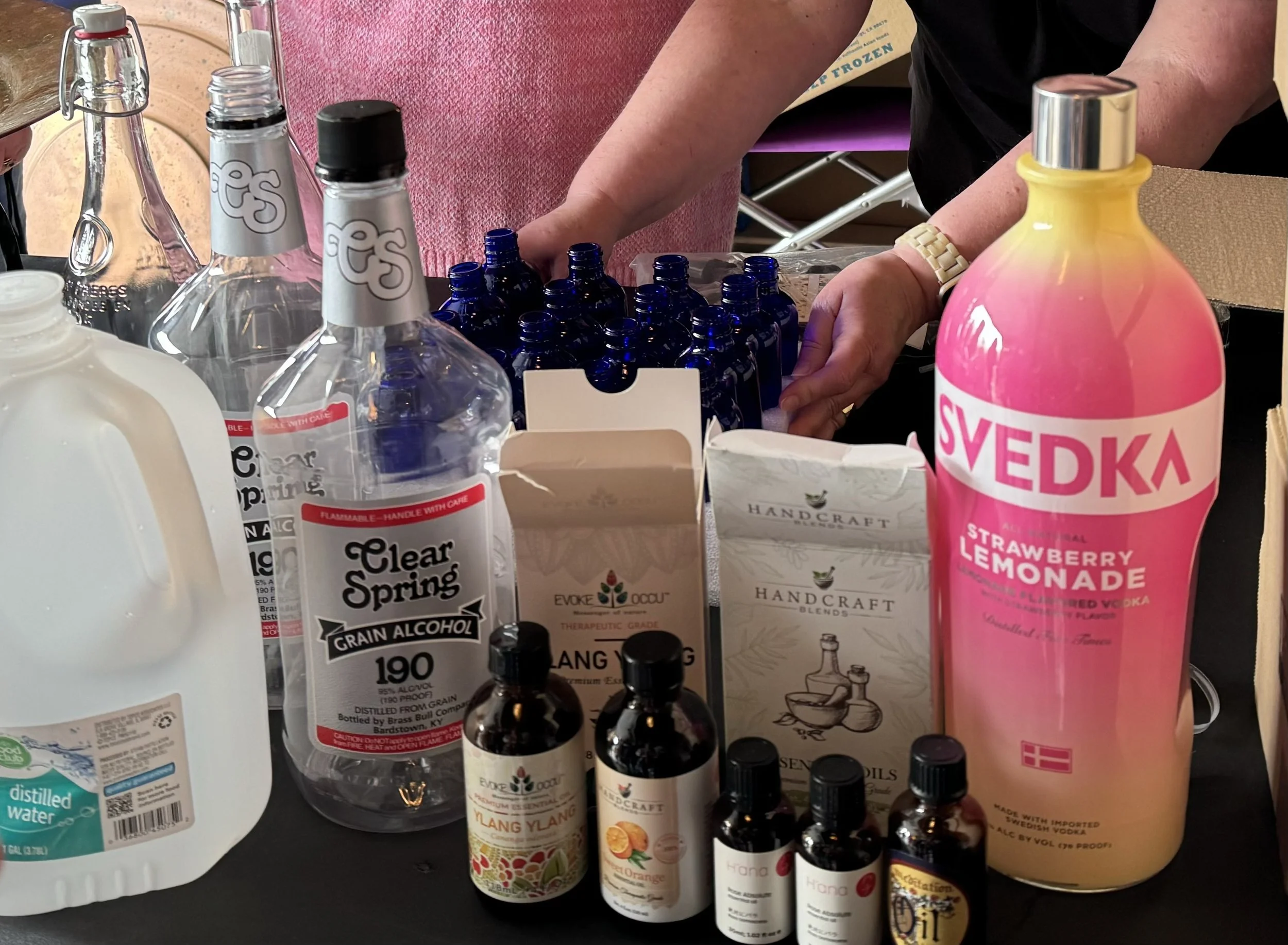
Today we will be using the following base:
• 1 liter 191-proof whole grain alcohol
• ½ liter 80-proof vodka
• 2 gallons distilled water
The amount of essential oils needed will depend on how you want the finished product to smell. The following blend well together. Begin with .5oz, and add more of whichever scent you want to bring to the forefront.
• rose otto
• sweet orange essential oil
• grapefruit essential oil
• ylang ylang essential oil
• clove essential oil
• kananga water
Blend the alcohols and distilled water, then add the essential oils and kananga water. Stir. Bottle. Label the finished blend clearly, store it away from heat and flame. Essential oils may settle, shake well before use